- 24% (1.8 million) of people aged 55-64 in England are physically inactive
- Only a quarter (23%) of people over 50 said that their GP had spoken to them about physical activity
- 45% (6.3 million) agreed they would feel happier about taking up a team sport or group activity if the focus was on fun, inclusion and enjoyment rather than ability and competition
- 50% (7 million) say having someone to go with would make it easier for them to join
As the nation gears up for a summer of sport with Wimbledon and the World Cup just weeks away, Age UK reveals new data, as part of its Act Now, Age Better campaign, showing that even though the health and wellbeing benefits of team sports and group activities are well known, confidence and self-perception are holding many people in midlife back from taking part.
Age UK’s Act Now, Age Better campaign, which brings together more than 50 sporting partners, including Lawn Tennis Association, Sport England, EFL in the Community, Commonwealth Games Team England, to encourage mid-lifers to get active, is now entering its second phase and launching ‘Team Age Better’.
Team Age Better is a different type of national team, made up of everyday people who are actively adding years to their life through movement and activity. Not elite. Not perfect. Just regularly showing up. At Age UK, we would love you to nominate the Team Age Better member in your life, someone who just keeps on moving!
With the UK’s ageing population, alongside a declining healthy life expectancy[i] and increasing pressure on the NHS, staying active in midlife has never been more important.
However, Sport England’s Active Lives survey shows a quarter (24%; equivalent to 1.8 million) of people aged 55-64 in England are physically inactive (they do less than 30 mins a week of physical activity) [ii]
Age UK’s latest research adds to the growing evidence that shows people from the UK aged 50-65 report positive benefits after taking part in exercise classes, group activities or team sports. Of those surveyed:
- 23% (equivalent to 3.2 million) said they felt healthier
- 20% (equivalent to 2.8 million) felt happy
- 20% (equivalent to 2.8 million) said they felt motivated to take part again
NICE’s Independent Clinical Experts and Age UK believe that simple steps taken in our 50s and 60s can deliver major benefits later in life. Becoming more physically active or joining team activities can reduce the risk of long-term health conditions and frailty, improve mobility, boost mental health and help maintain independence.

The importance of physical exercise and its role in preventing onset of dementia, disability and frailty in later life was prioritised by NICE in 2015. In its guidelines on midlife approaches to reduce the risk of dementia, disability and frailty, it made a number of key recommendations aimed at commissioners, mangers and practitioners with public health as their remit[iii]. One of which is being more active, along with having a healthy diet, losing weight and maintaining a healthy weight.
However, there is little evidence these have been adopted in any meaningful sense. Age UK’s own recent polling showed only 23%, a quarter, of people over 50 said that their GP had spoken to them about physical activity[iv] despite being a key recommendation of NICE.
Confidence and fear of judgement remain major barriers
Sadly, the research shows that concerns about ability and belonging are widespread among 50–65-year-olds:
Over a third (36%, equivalent to 5.1 million) worry they will not be good enough at the team sport or group activity. Women are more likely to feel this way (44%) than men (26%)
A similar proportion (34%, equivalent to 4.8 million) worry about not fitting in because of their age. Again, women are more likely to feel this way (39%) than men (28%)
The survey also revealed a high percentage of people in this age group agreed that social factors and how competitive the environment they are playing in, are key to their participation in team sports or group activities.
Non-competitive environments and having support
When thinking about team sports or group activities, certain circumstances may make it easier to join:
Half (50%, equivalent to 7 million) agreed having someone to go with would make it easier to join a team sport or group activity. This is similar for both men and women with 52% of women compared with 48% of men agreeing
Half (51%, equivalent to 7.2 million) agreed they would prefer a noncompetitive environment. 62% of women agreed with this, compared with 38% of men
Putting fun, inclusion and enjoyment first
Nearly half in this age group would feel happier about taking up a team sport or group activity if there was less focus on competitiveness and how good they were at it:
Overall, nearly half (45%, equivalent to 6.3 million) agreed they would feel happier about taking up a team sport or group activity if the focus was on fun, inclusion and enjoyment rather than ability and competition
48% of women agreed, compared with 42% of men
Low-pressure, inclusive formats could unlock participation
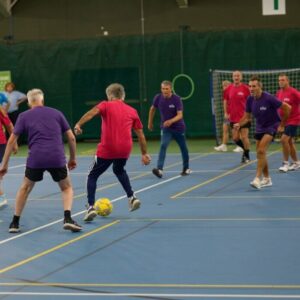
More than a third (37%, equivalent to 5.2 million) said they would feel more comfortable in a low-pressure environment such as walking football or social netball.
Women (39%) were similarly likely to agree with this to men (36%).
Experiences of age-related discrimination
A minority (8%, equivalent to 1.1 million) feel they have experienced age-related discrimination or bias while taking part in group activities or team sports. This was experienced equally between both men and women (both 8%).
Age UK says it is vital to challenge outdated perceptions about age and physical activity and ensure that opportunities to take part in team sports and group activities are genuinely inclusive.
A clear opportunity to get more people active
Age UK’s earlier Act Now, Age Better findings show that mid‑lifers face multiple barriers to physical activity – from health concerns and fear of injury to lack of time and cost pressures. Many are part of the “sandwich generation”, balancing care for children and ageing parents, often at the expense of their own wellbeing…
Storytellers
Kerry, 51 – “Tennis has genuinely given me purpose again.”
After breast cancer treatment left Kerry isolated, exhausted, and struggling to rebuild her strength, she discovered walking tennis through a local park session. “It was a turning point,” she says. The slower pace gave her a way back into activity when running and swimming felt impossible – and it reconnected her with a sport she’d loved since childhood.
What began as one gentle session quickly grew into something transformative. Walking tennis helped her regain confidence, rebuild her social life, and gradually return to full tennis. Two years on, she now plays competitively, coaches, and runs sessions for women recovering from breast cancer, as well as free community tennis in local parks.
For Kerry, the benefits go far beyond fitness. “It’s the conversations, the laughter, the belonging,” she says. “Tennis gave me purpose again.” She believes staying active in mid‑life is vital – not about being perfect, but about finding something accessible, enjoyable, and social. “Just start. Turn up. Opportunities can open from there.”
Derrick, 62 “the connections you make can be just as important as the exercise.”
After years of letting work and routine take over, Derrick realised in his mid‑40s that his health was slipping. A simple decision to start swimming became the catalyst for a complete lifestyle shift. “I found I loved it,” he says – and that enjoyment helped him naturally cut down on drinking, improve his diet, and build long‑lasting habits.
What began as a few swims a week grew into a full, active routine: gym sessions, table tennis, running, Parkrun, and even discovering new activities like pickleball. Just as important has been the social side. Regular faces at the pool turned into a community, complete with a WhatsApp group and meet‑ups. The same happened with table tennis and his local over‑55s club. “Those small interactions become something bigger,” he says.
Now active five days a week, Derrick sees movement as part of who he is – not a chore. His message for others in midlife is simple: find something you enjoy, start small, and let it grow. “If you enjoy it, you’ll stick with it. And the connections you make can be just as important as the exercise.”
For more information and to find out more go to: www.ageuk.org.uk/act-now
[i]www.ons.gov.uk/peoplepopulationandcommunity/healthandsocialcare/healthandlifeexpectancies/bulletins/healthstatelifeexpectanciesuk/between2011to2013and2022to2024#:~:text=1.,began%20in%202011%20to%202013.
[ii] Sport England released data tables based on the 24/25 Active Lives survey,
[iii] https://www.nice.org.uk/guidance/ng16
The NICE guideline includes recommendations on promoting a healthy lifestyle to reduce the risk of or delay the onset of disability, dementia and frailty by helping people to:
- stop smoking
- be more active
- reduce their alcohol consumption
- improve their diet and,
- lose weight and maintain a healthy weight if necessary.
[iv] Kantar Survey 2025 for Age UK Health Survey was conducted amongst 2665 adults in the UK aged 50+
Related Posts

Community Trust supports Age UK’s Act Now, Age Better campaign

Volunteer Kate’s Women’s Walking Football Story

Age UK evaluate impact of Walking Football partnership

Age UK Herefordshire & Worcestershire Walking Football Club

VIDEO: Age UK North Tyneside Walking Football Wallsend

Join a Walking Football group with Age UK Shropshire Telford & Wrekin
Author: The Walking Football
You create the memories; we help you relive them forever!