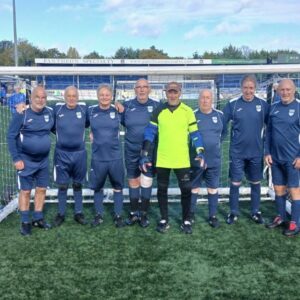
For Scottish football players moving into Over-35s leagues or Walking Football, a mid-life crisis can arrive disguised as a sporting problem. The pace changes, recovery takes longer, work and family compete for time, and the football identity you built over decades may suddenly feel less certain.
Yet this stage does not have to be about losing the player you were. It can be an opportunity to decide what football, health, work, and ambition should look like next. Scotland already has pathways for staying involved: Walking Football Scotland describes its game as a slower form of football intended to support physical, mental, and social wellbeing, while the Scottish FA has previously developed Over-35s opportunities to help players remain engaged.
The Short Version
A positive mid-life transition becomes easier when you stop measuring your present against your physical peak. Keep football in your life, but allow your relationship with it to evolve. Look after your body, maintain the social connections the game provides, explore interests beyond playing, and give yourself something new to work toward.
Most importantly, don’t confuse adaptation with surrender. Changing the way you play, can be what allows you to keep playing.

Find Walking Football clubs near you in our directory
Redefine What a Good Game Looks Like
For years, improvement may have meant becoming quicker, stronger, fitter, or more technically effective. After 35, progress can take different forms.
Maybe you become better at reading space. Perhaps you communicate more effectively, help younger teammates, coach, organize, or simply appreciate getting onto a pitch on a Tuesday night.
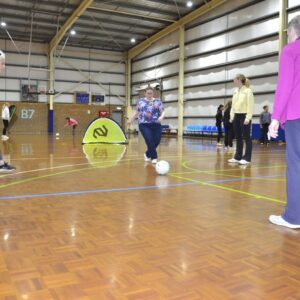
Walking Football makes this shift particularly visible. Its Scottish rules prohibit running and emphasize non-contact play, fundamentally changing which qualities matter. Experience, positioning, anticipation, passing, and decision-making suddenly have more room to shine.
That creates a useful mid-life lesson: when one advantage fades, another can become more valuable.
What Are You Actually Missing?
Sometimes the crisis isn’t really about football. It is about what football provided.
| What you may miss | A constructive replacement |
| Competition | Over-35s or Walking Football |
| Changing-room camaraderie | Regular sessions, volunteering, or coaching |
| Training targets | Personal fitness or mobility goals |
| Status as a player | Mentoring and leadership |
| Weekly structure | New sporting, family, or professional routines |
Identifying the missing ingredient makes the next move clearer. You may discover that you don’t need your old football life back; you need a new way of getting what mattered most from it.
Keep Your Health in the Starting XI
Prioritizing health doesn’t require reorganizing your entire life around a gym. Even when work is demanding, small choices can increase everyday physical activity: take the stairs instead of the elevator, go for a walk during your lunch break, or add movement to journeys that would otherwise be completely sedentary.
For footballers, this mindset can be especially useful. You already understand that consistency matters. Apply the same principle to life away from the pitch: modest actions repeated regularly can be more sustainable than an ambitious routine you abandon after two weeks.
The objective isn’t to construct your entire future immediately. It is to regain forward movement. Mid-life can feel unsettling because familiar markers of progress begin to move. But a changing football career can become an invitation to build a broader, healthier definition of success. Keep the parts of the game that still give you energy, make room for new ambitions, and adapt when your circumstances demand it. The next chapter does not need to resemble the first half to be worth playing.
FULL STORY at source: https://scottishfsa.org/finding-inspiration-and-positivity-when-football-and-life-starts-to-change-by-ben-sullivan/
Ready to play? Join a Walking Football club near you
Related Posts

Walking football has taken off in East Devon – here are the towns where you can play
Walking sports may boost physical and psychosocial health in older adults, review finds
Eastbourne United footballers walking to success – and a healthy future
Help The WFA with survey about AXA’s Support for Women’s Walking Football

Get moving is goal for new walking football session
Walking footballers mark Women’s Health Week

Author: The Walking Football
You create the memories; we help you relive them forever!