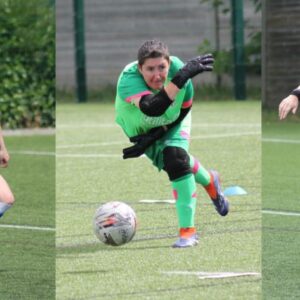
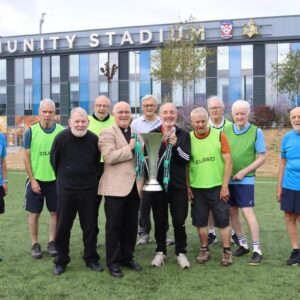
The physical activity lead for Parkinson’s UK explains how, backed by Sport England funding, his charity is helping people with the condition to manage their symptoms by being active.
There’s a quote from a person with Parkinson’s at one of our funded projects that is one of my favourites: “Being physically active is just as important as my Parkinson’s medication.”
It’s a powerful message that we use a lot as it illustrates why physical activity is one of the top priorities for the Parkinson’s community and the charity.
Today is World Parkinson’s Day, and many may not know how brutal the condition is.
More than 40 physical and mental symptoms do their best to wreak havoc on mind and body, and despite advances in treatments there is currently no cure for what is the fastest growing neurological condition in the world.
However, all over the world people with the condition are running, walking, visiting gyms and taking part in every sport you’ve ever heard of, and probably a few you haven’t.
And this is because being active can slow the progression of symptoms and helps people live well with the condition.
In 2017, Parkinson’s UK received an award from Sport England to help us identify and break down the barriers that inactive people with Parkinson’s faced to becoming active.
I joined the charity in 2018 and embarked on a very steep learning curve, with lot to do and a lot of people to meet.
Many barriers, like access to transport, cost of sessions and a lack of trained and condition-aware activity providers, are common across the sector and the wider population.
But after one person with Parkinson’s described the condition as “like having permanent jet lag, alongside tremors, freezing, falling, anxiety and depression”, you begin to understand that it’s not just as simple as helping someone get to a gym.
It’s fair to say that back in 2018 our understanding of the benefits of being active was limited (to say the least).
As a charity we supported a lot of local activity sessions but we lacked a strategic approach, resources and dedicated staff.
Fast forward to 2024 and thankfully, we’re seeing a very different picture.
Get active, stay active
Physical activity and our ‘Get Active Stay Active’ strategy is a priority for the charity. We wrote a strategy to elevate our delivery from regional to national, and united colleagues from across the charity, healthcare and activity professions and the Parkinson’s community.
READ MORE about Get active, stay active: https://www.sportengland.org/blogs/taking-back-control-parkinsons

Author: The Walking Football
You create the memories; we help you relive them forever!